



When your steering wheel starts shaking, it immediately gets your attention, and it should. Steering wheel vibration is rarely random. It’s usually a sign that something within your vehicle’s tires, brakes, suspension, or steering system isn’t working the way it should. Whether the shaking happens at highway speeds, while braking, or during acceleration, it’s a warning you shouldn’t ignore.
Understanding why your steering wheel is shaking is the first step toward fixing the problem. In this guide, you’ll learn the most common causes of steering wheel vibration, how to recognize the patterns behind it, and when it’s time to schedule a professional inspection to restore a smooth, stable driving experience.
Unbalanced or Misaligned Tires
If your steering wheel shakes at higher speeds—usually between 50 and 70 mph—your tires are one of the first areas to investigate. Unbalanced tires are one of the most common causes of steering wheel vibration. When weight is unevenly distributed around the wheel, even slightly, that imbalance creates shaking as the tire rotates.
Potholes, curb impacts, and normal tread wear can all affect balance. Over time, wheel weights may fall off, worsening the issue. The vibration may begin subtly, but often becomes more noticeable as speed increases.
Wheel misalignment is another major contributor. Alignment issues develop when suspension angles move outside manufacturer specifications. You may notice your vehicle pulling to one side or the steering wheel sitting off-center even when driving straight.
Signs Your Tires May Be Causing Steering Wheel Vibration
- Shaking increases at highway speeds
- Uneven or rapid tire tread wear
- Vehicle pulls left or right
- Steering wheel feels off-center
Ignoring tire imbalance or alignment problems accelerates wear and reduces fuel efficiency. Routine tire rotation, balancing, and wheel alignment services help maintain stability and extend tire life.
Warped Brake Rotors and Brake System Concerns
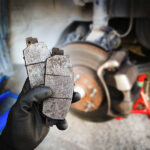
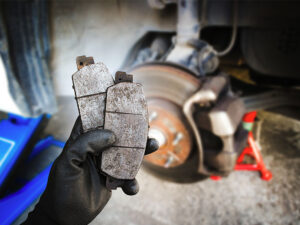
If your steering wheel shakes primarily when braking, warped brake rotors are a likely cause. Brake rotors provide a smooth surface for brake pads to clamp against. Excessive heat from repeated braking can cause the rotor surface to warp or develop uneven thickness.
When this happens, brake pads can’t maintain consistent contact. The result is pulsation that travels through the brake system and into your steering wheel. You may also feel a rhythmic pulsing sensation in the brake pedal.
Common Symptoms of Warped Brake Rotors
- Steering wheel shakes when braking
- Brake pedal pulsates
- Increased stopping distance
- Grinding or squealing noises
Delaying brake repair can reduce stopping efficiency and compromise your safety. Resurfacing or replacing warped rotors and installing high-quality brake pads restores smooth braking performance. Regular brake inspections ensure your system remains reliable and responsive in all driving conditions.
Worn Suspension and Steering Components
Your suspension and steering systems are responsible for keeping your vehicle stable, balanced, and easy to control. When components such as tie rods, ball joints, control arms, or bushings wear out, steering wheel vibration can develop.
You may notice shaking when turning, driving over uneven pavement, or traveling at moderate speeds. In some cases, the steering wheel may feel loose or less responsive. These symptoms often indicate excess movement within the steering assembly.
Warning Signs of Suspension or Steering Problems
- Clunking or knocking noises over bumps
- Uneven tire wear patterns
- Loose or wandering steering
- Vehicle drifting during turns
Ignoring worn suspension or steering components allows handling problems to worsen and can lead to uneven tire wear and alignment issues. As parts continue to loosen, your vehicle may feel increasingly unstable, especially during turns or sudden stops.
Addressing these issues early restores proper control, improves ride comfort, and helps ensure a safer, more predictable driving experience.
Wheel Bearing Failure
Wheel bearings allow your wheels to spin smoothly with minimal friction. When a wheel bearing begins to fail, steering wheel vibration often follows, especially at higher speeds. Unlike a simple tire imbalance, bearing issues typically produce noticeable noise along with vibration.
You might hear a humming, grinding, or growling sound that increases with your speed. The sound may change when turning left or right because shifting weight alters pressure on the damaged bearing.
Wear and tear over time is a common cause of wheel bearing failure. Contamination from water or debris can also damage internal components.
Driving with a failing wheel bearing can lead to serious mechanical issues, including wheel hub damage or compromised wheel stability. Prompt replacement eliminates vibration and restores smooth rotation.
Engine Mount and Drivetrain Problems
If your steering wheel vibration occurs mainly during acceleration, the issue may be related to your engine mounts or drivetrain components. While tire and brake problems are more common, engine and drivetrain issues can produce noticeable shaking under specific conditions and should not be overlooked.
Engine mounts secure the engine to the frame and are designed to absorb normal operating vibration. When mounts crack, collapse, or deteriorate, excess engine movement transfers directly into the cabin. You may feel shaking in the steering wheel, dashboard, or floor—especially when accelerating, shifting gears, or idling in drive.
Drivetrain components such as CV joints, axles, and driveshafts can also create vibration when worn or damaged.
Drivetrain-Related Vibration Clues
- Clicking noise when turning
- Vibration primarily during acceleration
- Shaking at specific speed ranges
- Visible axle or CV joint damage
Because these systems work together to deliver power to your wheels, diagnosing the exact cause requires professional inspection and proper equipment. Ignoring these warning signs can lead to more extensive mechanical damage and higher repair costs.
When Should You Schedule a Professional Inspection?
You should schedule a professional inspection as soon as steering wheel vibration becomes consistent, noticeable, or progressively worse. While a slight tremor at certain speeds may seem minor, persistent shaking often signals a mechanical issue that won’t correct itself. The longer you wait, the greater the risk of uneven tire wear, brake damage, suspension strain, or drivetrain complications.
Timing also matters. If the vibration appears during braking, acceleration, or highway driving, those patterns can point to specific systems that need attention. Changes in intensity, new noises, or pulling to one side are additional signs that professional diagnostics are necessary.
Signs It’s Time to Book an Inspection
- The shaking increases over time
- Vibration occurs every time you brake
- You hear grinding, humming, or clunking sounds
- Your vehicle pulls left or right while driving
A trained technician can accurately diagnose the source of the vibration and recommend targeted solutions, restoring smooth steering, reliable handling, and overall driving safety.
Get Back to a Smooth Ride with Owens 30 North Auto Repair
A shaky steering wheel is never something to overlook. As you’ve seen, the cause can range from simple tire imbalance to more complex brake, suspension, or drivetrain issues. The key is recognizing the pattern, responding early, and making sure the problem is diagnosed correctly before it leads to bigger repairs.
That’s where we come in. At Owens 30 North Auto Repair, we take a comprehensive approach to vehicle diagnostics and repair. Instead of guessing or replacing parts unnecessarily, we perform thorough inspections to identify the true source of the vibration.
Don’t wait for a steering wheel vibration to turn into a costly repair. Contact Owens 30 North Auto Repair today to schedule your inspection and experience dependable auto repair service.