

Your suspension system does much more than make your ride comfortable. It helps your tires stay in contact with the road, supports stable steering, and keeps your vehicle controlled when you brake, turn, or drive over uneven pavement.
Suspension problems often develop gradually, so the warning signs can be easy to overlook. You may notice extra bouncing, unusual noises, uneven tire wear, or a change in the way your vehicle handles. Recognizing those symptoms early can help you avoid additional damage and make it easier to address the problem before it begins affecting your safety, tires, or other vehicle components.
What Your Vehicle’s Suspension System Does
Your suspension system connects your vehicle’s body to its wheels while allowing the wheels to move over bumps, dips, and rough pavement. Its job is to manage that movement without letting your vehicle bounce excessively, lean too far, or feel unstable.
Most suspension systems include several connected components:
- Shocks or struts
- Springs
- Control arms
- Ball joints
- Bushings
- Sway bars and sway bar links
- Wheel bearings
- Steering knuckles
Each part contributes to the way your vehicle rides and handles. Springs support the vehicle’s weight and compress when you drive over uneven surfaces. Shocks and struts control the movement of those springs so the vehicle settles instead of continuing to bounce.
Control arms and ball joints allow the wheels to move while helping keep them in the correct position. Bushings reduce vibration and cushion movement between metal components. Sway bars help control body roll when you turn.
Since these parts work together, wear in one area can affect the performance of the entire system. A worn strut may allow excessive wheel movement, while a deteriorated bushing may affect wheel position and alignment.
That connection between comfort, stability, and control is why suspension maintenance matters so much.
Why Suspension Problems Can Affect Your Safety
Your suspension helps manage how your vehicle’s weight shifts during braking, acceleration, and cornering. When the system is working properly, those movements should feel smooth and predictable.
Worn or damaged components can make your vehicle respond differently. The front end may dip more than usual when you brake, the body may lean noticeably through turns, or the tires may have difficulty maintaining consistent contact with the road after a bump.
These changes can make steering feel less precise and may reduce your confidence behind the wheel. They can become especially noticeable during sudden stops, sharp turns, wet weather, or highway driving.
Suspension wear can also affect other areas of your vehicle. Poor wheel positioning may contribute to uneven tire wear, and loose components can place additional stress on nearby steering or suspension parts.
For that reason, you shouldn’t think of suspension problems as ride-quality concerns alone. They can influence how safely and predictably your vehicle responds when you need it most.
Common Signs Your Suspension Needs Work
Suspension wear doesn’t always happen suddenly. In many cases, the ride and handling change so slowly that you become accustomed to them.
Knowing what to watch for can help you recognize when your vehicle needs a closer inspection.
Your Vehicle Bounces More Than Usual
Your vehicle should settle fairly quickly after driving over a bump or dip. If it continues moving up and down, your shocks or struts may not be controlling spring movement effectively.
You may also notice that the vehicle feels floaty or unsettled on uneven roads. At higher speeds, that sensation can make it harder to feel fully connected to the road.
Extra bouncing doesn’t automatically confirm that a shock or strut has failed, but it’s a strong reason to have the suspension checked.
Your Car Pulls to One Side
If your vehicle consistently drifts left or right on a level road, the cause could involve the tires, wheel alignment, brakes, steering, or suspension.
Start by checking your tire pressure. A low tire can cause pulling, and correcting the pressure may resolve the issue. If the pressure is correct and the pulling continues, the vehicle should be inspected.
Worn suspension components can change the position of a wheel, while an alignment problem or a dragging brake can produce a similar feeling. Since several conditions can cause the same symptom, proper diagnosis is more useful than replacing parts based on guesswork.
Your Tires Are Wearing Unevenly
Your tires can reveal a great deal about the condition of your suspension and alignment.
You may notice heavier wear on the inside or outside edge of the tread. Other patterns can include bald patches, scalloped areas, or cupping, which creates alternating high and low sections around the tire.
Uneven tire wear can reduce traction, create road noise, and shorten tire life. Replacing the tires without correcting the underlying cause may allow the same wear pattern to return.
If one tire looks noticeably different from the others, we recommend having the tires, alignment, and suspension evaluated together.
You Hear Clunking, Knocking, or Squeaking
Unusual noises often become more noticeable when you drive over bumps, turn into a driveway, or move the steering wheel.
Clunking or knocking may be associated with a loose or worn suspension component. Squeaking can come from deteriorated bushings or other moving parts, while metallic noises may indicate that something is damaged or out of position.
A noise alone doesn’t identify the exact part that needs attention. However, new or worsening sounds shouldn’t be ignored, especially when they’re accompanied by changes in steering or handling.
Your Vehicle Leans Too Much in Turns
Some body movement is normal when you turn, but your vehicle shouldn’t feel as though it’s tipping heavily toward the outside of a curve.
Excessive leaning may be related to worn shocks, struts, springs, or sway bar components. It can make cornering feel less controlled and may become more obvious when you’re carrying passengers or cargo.
If your vehicle feels loose, top-heavy, or unstable around curves, a suspension inspection can help identify the source.
The Front End Dips When You Brake
A small amount of forward movement is normal during braking. If the front of your vehicle drops sharply, the suspension may not be controlling weight transfer as well as it should.
You may also notice the rear of the vehicle rise during a harder stop. This movement can make the vehicle feel less stable and may be more noticeable in an emergency braking situation.
Because your braking and suspension systems both contribute to vehicle control, excessive dipping is worth addressing promptly.
One Corner of Your Vehicle Sits Lower
Park your vehicle on a flat surface and compare its height from side to side. If one corner appears noticeably lower, a spring or another suspension component may be worn or damaged.
Uneven ride height can affect wheel alignment, tire wear, and the way the vehicle handles during braking and turns. You might also hear a rattling or metallic sound if a spring is cracked.
A visible height difference shouldn’t be treated as a cosmetic concern. It’s a sign that the suspension may no longer be supporting the vehicle evenly.
Your Steering Feels Loose or Unstable
If your vehicle wanders within the lane or requires frequent steering corrections, a steering or suspension component may have developed excessive movement.
You may notice delayed response when you turn the wheel, vibration at certain speeds, or a vague feeling on rough roads. Possible causes can include worn joints, bushings, tie rod ends, or wheel bearings.
Since loose steering directly affects your ability to control the vehicle, we recommend scheduling an inspection rather than waiting for the symptom to worsen.
If you’ve noticed one or more of these warning signs, schedule a suspension inspection with Owens 30 North Auto Repair before the problem worsens. Our team can identify the source of the issue and help you determine the right next step for your vehicle.
How Suspension Problems Affect Your Tires
Your suspension is designed to keep each tire positioned correctly against the road. When a component wears, the wheel may move more than intended or sit at an improper angle.
That change can concentrate pressure on one part of the tread. Instead of wearing evenly, the tire may develop excessive edge wear, cupping, or isolated bald areas.
Suspension-related tire issues may lead to:
- Shorter tire life
- Reduced wet-weather traction
- Increased road noise
- Steering wheel vibration
- Less predictable handling
- More frequent alignment problems
Checking your tires regularly can help you spot these patterns before they become severe. Look across the entire tread surface, including the inner edge, which may be difficult to see from the outside.
If you notice unusual wear, replacing the tire may only solve part of the problem. The suspension and alignment should also be checked so the same issue doesn’t damage the replacement tire.
What Causes Suspension Components to Wear Out?
Suspension parts wear naturally as you drive, but certain conditions can accelerate that process.
Potholes are a common source of damage. A hard impact can affect a strut, spring, control arm, wheel, tire, or alignment. Hitting a curb or driving over road debris can create similar problems.
Other factors that may contribute to faster wear include:
- Frequent driving on rough or unpaved roads
- Carrying more weight than your vehicle is designed to handle
- Exposure to road salt, moisture, and corrosion
- Driving with incorrect tire pressure
- Delaying alignment or tire repairs
- Aggressive braking and cornering
- Previous collision or impact damage
You can’t avoid every rough surface, but slowing down before potholes, speed bumps, and damaged pavement can reduce the force placed on the suspension.
Proper tire inflation and timely alignment service can also help limit unnecessary stress on suspension components.
What You Can Check at Home
You can perform a few basic checks yourself, although they won’t replace a professional inspection.
Begin by looking at your tires for cupping, bald areas, or uneven edge wear. Then park on a level surface and check whether one side or corner sits lower than the others.
During your next drive, pay attention to any changes in the way the vehicle feels. Useful signs to monitor include:
- Extra bouncing after bumps
- Pulling or drifting
- New noises
- Increased body lean
- Steering vibration
- A loose or floating sensation
You can also look for visible fluid around the shocks or struts. A significant leak should be inspected, although appearance alone doesn’t always confirm whether the component needs replacement.
Some drivers use a bounce test by pressing down on one corner of the vehicle and watching how quickly it settles. This may reveal excessive movement, but it isn’t a complete or definitive test, particularly on vehicles with modern suspension designs.
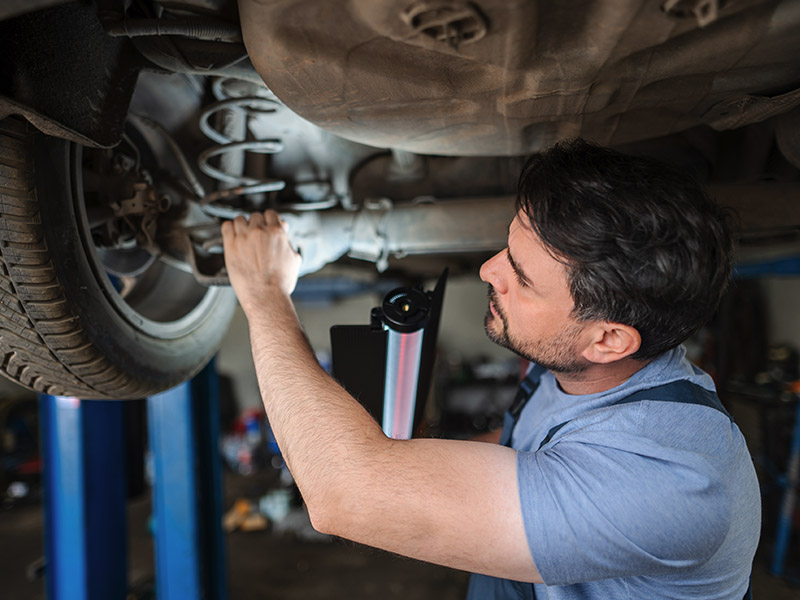
For your safety, don’t crawl underneath a vehicle unless it’s properly lifted and supported with suitable equipment. Many suspension problems can only be identified when the vehicle is raised and the components are checked for movement, wear, or damage.
Why a Professional Suspension Inspection Matters
Several vehicle problems can create similar symptoms. Pulling, vibration, noise, and uneven tire wear may come from the suspension, tires, brakes, steering system, or wheel alignment.
A professional inspection helps separate those possibilities and identify the actual cause.
During a suspension inspection, a technician may examine:
- Shocks and struts for leaks or damage
- Springs for sagging, cracks, or corrosion
- Ball joints and bushings for excessive movement
- Control arms for bending or impact damage
- Sway bar components for wear or looseness
- Wheel bearings for noise or play
- Tire tread for abnormal wear
- Steering components for looseness
- Ride height and wheel alignment
The findings will depend on your vehicle and the symptoms you’re experiencing. A complete inspection can help determine which concerns need immediate attention and which items can be monitored or planned for later.
That approach helps you make informed repair decisions without replacing components unnecessarily.
When You Should Schedule Suspension Service
You should consider scheduling suspension service whenever you notice a clear change in ride quality, steering response, tire wear, or vehicle stability.
An inspection is also a good idea after a major impact with a pothole, curb, or road hazard. Damage isn’t always obvious immediately, and some symptoms may not appear until the affected component wears further.
You’ll want to arrange service if:
- Your vehicle won’t stay aligned
- Your tires wear unevenly
- You hear repeated noises over bumps
- The steering wheel shakes or feels loose
- Your vehicle feels unstable at higher speeds
- One side of the vehicle sits lower
- Handling changed after an impact or collision
There isn’t one replacement interval that applies to every suspension part. Component life varies based on vehicle design, mileage, road conditions, driving habits, and previous repairs.
That’s why paying attention to changes in the way your vehicle drives is often more helpful than waiting for a specific mileage milestone.
Why Delaying Suspension Repair Can Cost More
It may be tempting to postpone suspension service when your vehicle still runs and the symptoms seem manageable. However, worn components can place additional stress on nearby parts.
For example, excessive wheel movement may cause premature tire wear. A damaged spring may affect ride height and alignment. A loose joint or bushing can allow movement that contributes to further wear.
As the problem progresses, you may face a combination of suspension repairs, tire replacement, and alignment service rather than one focused repair.
There’s also a practical safety concern. Since suspension wear often develops gradually, you may adjust to poor handling without realizing how much the vehicle’s response has changed.
Addressing the problem early can help reduce secondary damage and give you more control over when and how the repair is completed.
How Owens 30 North Auto Repair Can Help
When you bring your vehicle to Owens 30 North Auto Repair, our team will listen to the symptoms you’ve noticed and inspect the areas most likely to be involved.
We understand that bouncing, pulling, noise, vibration, and uneven tire wear can have more than one cause. That’s why we focus on identifying the source of the problem before recommending repairs.
Depending on what we find, your vehicle may need suspension work, steering service, tire attention, or a wheel alignment. We’ll explain the findings so you can understand what needs attention and why.
Our goal is to help you make a confident decision based on your vehicle’s condition, not assumptions. Whether your ride feels rough, your steering has changed, or your tires are wearing unevenly, Owens 30 North Auto Repair is ready to help you determine the next step.
Schedule Your Suspension Inspection Today
Your suspension affects how your vehicle steers, brakes, corners, and responds to the road. Bouncing, clunking, uneven tire wear, excessive leaning, and loose steering are all signs that deserve attention.
Owens 30 North Auto Repair can help you identify the cause of those symptoms and determine what your vehicle needs. We’ll evaluate the concern, explain the findings, and help you plan the appropriate service.
Don’t wait for a minor handling issue to become a larger repair. Contact Owens 30 North Auto Repair today to schedule a suspension inspection and keep your vehicle driving safely and confidently.